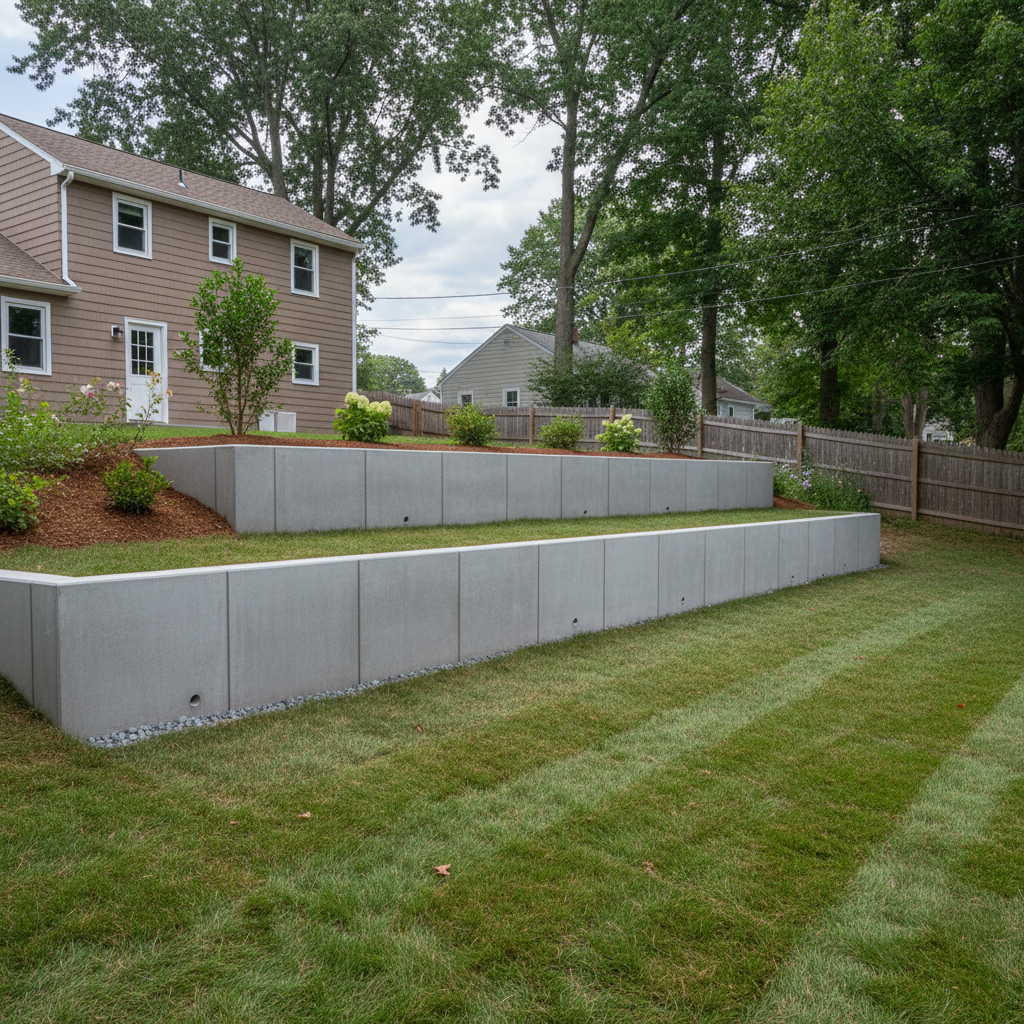
So, you're thinking about putting in a concrete retaining wall. Maybe your sloped yard in Edgewood is eroding, or you just need to level out some space for a patio. Whatever the reason, you're probably wondering what this project will actually set you back here in Cranston. I get it; nobody likes surprises when it comes to home improvements, right?
Let's talk real numbers and what actually goes into pricing a concrete retaining wall. It's not just the concrete itself, you know; there's a whole lot more involved.
What Makes a Retaining Wall Cost What It Does?
Lots of things affect the final price tag. You can't just throw out a single number because every job is truly unique. Here's what I look at when I'm putting together a quote for someone:
- Wall Size: This is a big deal. How long will the wall be? How tall does it need to stand? A small, two-foot-high garden wall is a totally different animal than a six-foot-tall structural wall holding back a significant amount of earth. More material, more labor, more cost — it's pretty straightforward.
- Wall Type & Design: Are we talking about a simple poured concrete wall? Or do you want something fancier, like a stamped or colored finish? Block walls, segmental retaining walls (SRW), or even precast concrete panels all have different material and installation costs. Poured concrete, by the way, is often a very strong and cost-effective choice, especially for those taller, structural needs.
- Site Accessibility: Can my crew and equipment get to the work area easily? If we have to hand-carry every single bag of concrete or dig by hand because a machine won't fit, that adds a lot of labor time and, naturally, cost. Tight backyards or properties with steep grades can be pretty tricky.
- Soil Conditions: This is huge, especially here in Rhode Island. We've got a lot of clay and rocky soil in places around Cranston, and sometimes we even hit ledge. If we need to do extensive digging, bring in specialized fill, or install complex drainage systems because of bad soil, that's definitely going to push the price up. A proper foundation is absolutely essential for a wall that's actually going to last.
- Drainage Requirements: Any good retaining wall needs proper drainage behind it. Why? To keep hydrostatic pressure from building up and eventually pushing the wall over. This usually means gravel backfill, perforated pipes, and sometimes even weep holes. Don't skimp on this part; it's critical for the wall's longevity.
- Permits & Engineering: For taller or more complicated walls, you'll definitely need a permit from the city. Often, an engineer's stamp on the design is required too. These aren't free, and they add a bit of time to the project timeline.
Typical Cost Ranges for Concrete Retaining Walls in Cranston
Alright, let's get down to some numbers. Remember, these are general ranges for our area. A small, non-structural concrete garden wall (let's say, 2-3 feet high) might run you anywhere from $30 to $50 per linear foot. This is for basic poured concrete or simple block. However, for a more substantial, structural concrete retaining wall, 4-6 feet high, engineered, and built to stand the test of time, you're generally looking at $80 to $150+ per linear foot. That price includes excavation, proper drainage, rebar reinforcement, formwork, concrete, and backfilling.
If you're going for decorative finishes like stamping, coloring, or custom textures, expect to add another 20-50% to those base costs. It just depends on how intricate you want it.
What Should a Quote Include?
When Synergy Concrete & Masonry gives you a quote, we break it down so you know exactly what you're paying for. A good quote, in my opinion, should clearly outline:
- Materials: Concrete, rebar, gravel, drainage pipe, formwork, and so on.
- Labor: Hours for digging, pouring, finishing, and cleaning up.
- Equipment: Costs for machinery like excavators, concrete pumps, etc.
- Site Preparation: Demolition of old structures, clearing the area, grading.
- Permits & Engineering: If they apply, these should be listed separately.
- Waste Removal: Hauling away excavated soil and debris.
- Warranty: What kind of guarantee do they offer on their work?
If a quote just gives you one big lump sum, ask for a more detailed breakdown. You deserve to know where your money is actually going.
How to Avoid Overpaying
Here's my best advice for getting a fair price and a quality job:
- Get Multiple Quotes: Don't just go with the first contractor you call. Get at least three detailed quotes. This helps you compare not just the price, but also what each contractor plans to include in the job.
- Check References & Reviews: A low bid isn't really a good deal if the work is shoddy and you have to pay someone else to fix it later. Look for contractors with a solid reputation and positive feedback.
- Understand the Scope: Make sure every contractor is quoting on the exact same scope of work. If one contractor includes engineered plans and extensive drainage, and another doesn't, their prices won't be comparable at all.
- Don't Chase the Lowest Price: This is a big one, truly. A retaining wall is a structural part of your property. It needs to be built right, or it can fail, causing much bigger problems and expenses down the road. Sometimes, paying a bit more upfront for quality materials and experienced craftsmanship saves you a ton of headaches and money in the long run.
Building a strong, durable concrete retaining wall is an investment in your property. Do your homework, ask the right questions, and choose a contractor who really knows their stuff. You'll be glad you did.