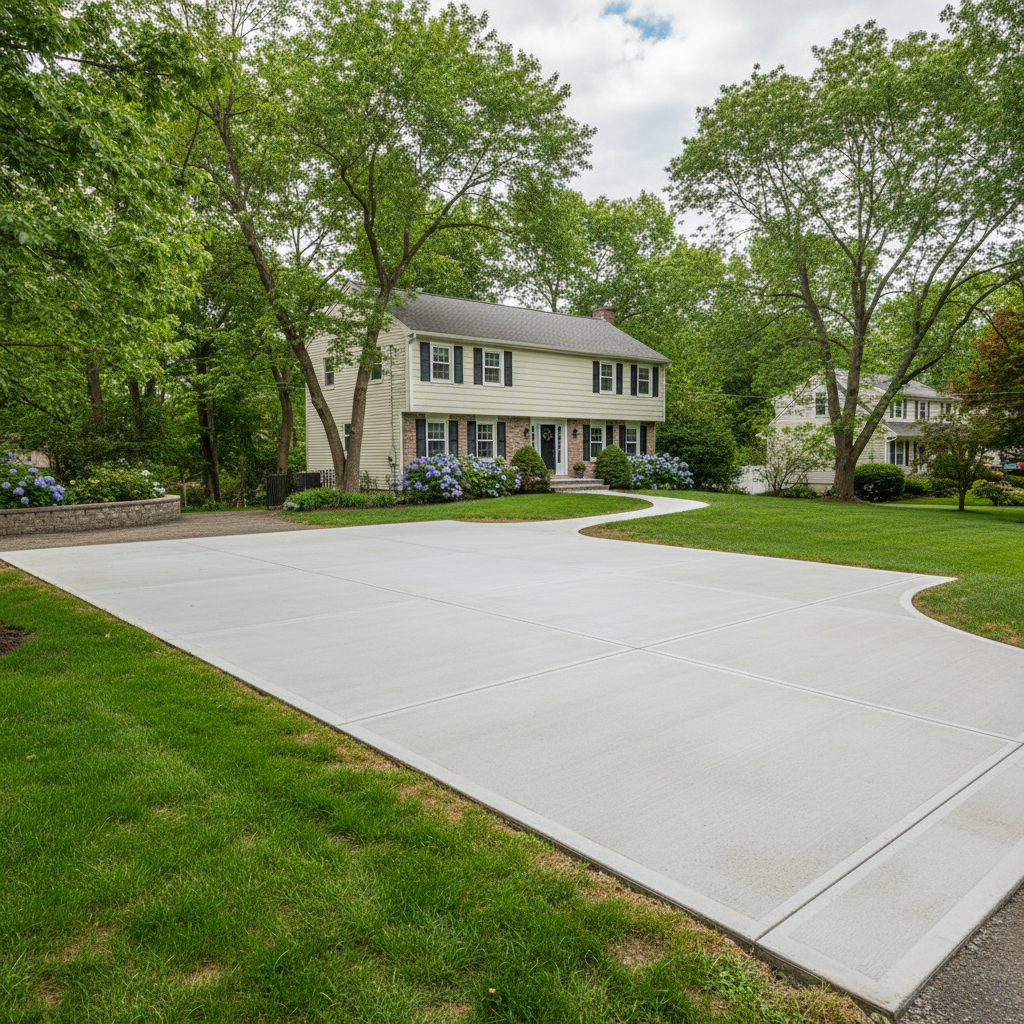
Cracked driveways and sunken steps occur frequently for homeowners in Cranston, Rhode Island, especially after dealing with a severe New England winter. Property owners staring at a crumbling slab in an Edgewood driveway or a heaved sidewalk in Knightsville often wonder how to fix the damage correctly. Synergy Concrete & Masonry sees homeowners rush into Concrete Repair projects without knowing what to expect, and that is usually where mistakes happen during Concrete Repair.
The Concrete Repair Timeline
Most standard residential Concrete Repair projects take anywhere from 2 to 5 days from start to finish, depending on the scope of the damage. Day one usually involves demolition and breaking out the damaged material. Synergy Concrete & Masonry hauls away the old concrete so we are working with a clean slate. Day two involves prepping the sub-base, setting forms, and pouring. Then comes the waiting period for Concrete Repair. Concrete needs time to cure properly. Homeowners can usually walk on the surface after 24 to 48 hours, but vehicles must stay off a new driveway pour for at least 7 days. If a contractor states that heavy trucks can drive over fresh concrete the next day, the advice is incorrect.
What to Expect During the Process
Noise and dust occur right at the beginning of the Concrete Repair process when hammers and saws start operating. Synergy Concrete & Masonry tries to keep the work area contained, but cutting concrete is inherently messy work. Access to the garage or driveway is lost for a few days, requiring residents to park down the street on Park Avenue or nearby areas. Weather plays a massive role in Cranston, Rhode Island. If a Nor'easter rolls in or a multi-day downpour occurs, the concrete crew must pause the pour. Concrete hates freezing temperatures and heavy rain when it is trying to set up. Synergy Concrete & Masonry watches the forecast closely, but local weather patterns dictate the final schedule.
How to Prepare Your Property
Homeowners must clear out the work area before the crew arrives for Concrete Repair. Vehicles need to move out of the driveway, temporary fences must come down, and garden hoses need to be rolled up. Sprinkler lines running near the repair zone require clear flagging so excavation equipment does not clip them. Informing neighbors about the upcoming Concrete Repair work is helpful, especially when blocking a shared driveway or tight street access in Oaklawn. Outdoor water spigots must remain turned on and working because water is required on-site for mixing and clean-up during Concrete Repair.
Questions to Ask Before Signing a Contract
Contracts should not be signed until property owners receive straight answers to important questions about Concrete Repair. Homeowners must ask who is actually performing the physical labor. Synergy Concrete & Masonry completes work with our own team rather than using random day laborers. Inquiries must also cover sub-base preparation because a surface pour on top of uncompacted Cranston soil will crack again in a short time. Warranty details for the Concrete Repair work must be established clearly. A reputable contractor stands behind their pours. Property owners must also make sure the company pulls proper local permits if the repair touches public sidewalks or alters structural layouts. Everything must be put in writing before a single shovel hits the dirt.