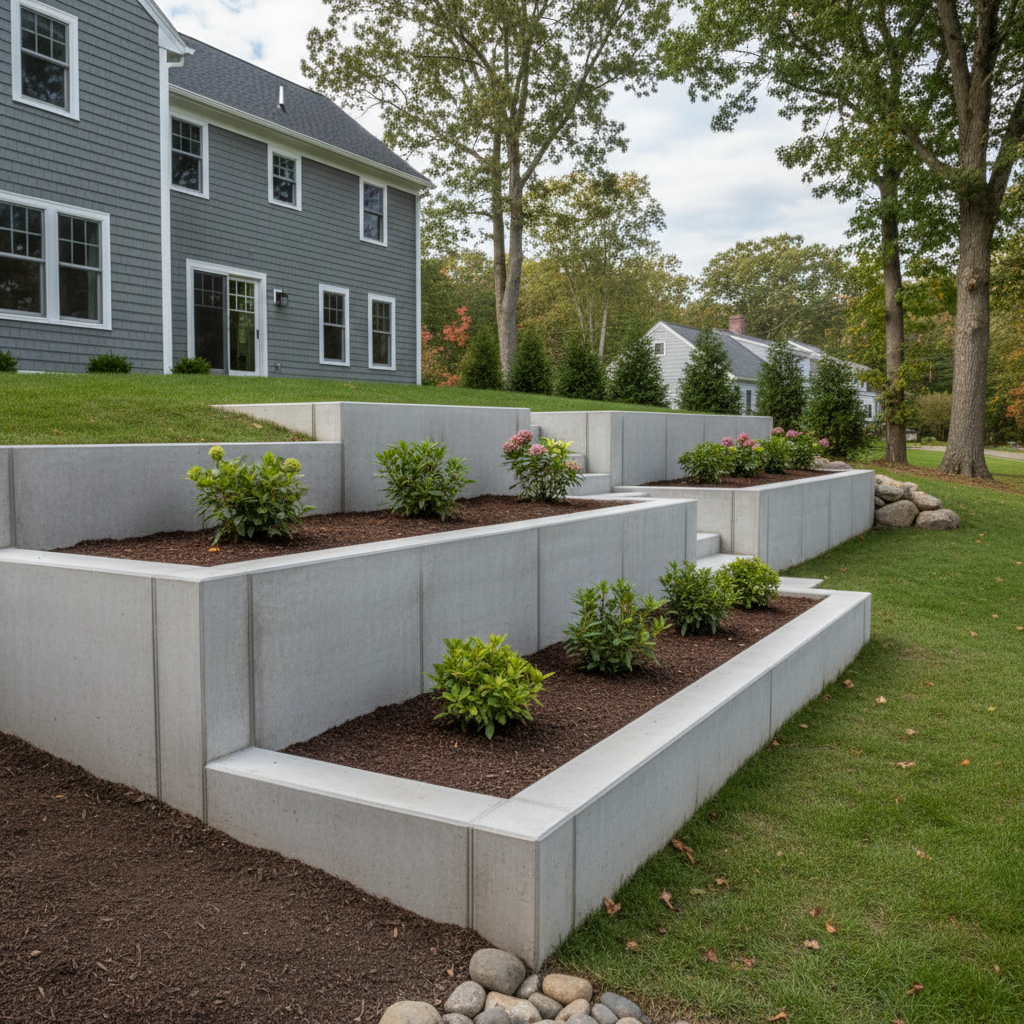
Alright, let's talk retaining walls. I've seen a lot of projects come and go here in Cranston over the years, and a good chunk of my work involves fixing mistakes made by others. When it comes to concrete retaining walls, there are some pretty common missteps homeowners make that can turn a smart investment into a real headache. You don't want to regret that wall a year or two down the line, do you?
Skipping the Site Assessment (or doing it yourself)
This is probably the biggest one. People often look at their sloped yard and think, "Yep, I need a wall there." They might even measure it out. But what they don't see, and what they often don't even think about, is what's going on *under* the ground. Here in Cranston, especially in areas like Edgewood or near the Pawtuxet River, we can have some pretty varied soil conditions. You might hit bedrock, or you might hit soft, sandy fill that just won't support a heavy concrete wall without proper engineering.
A professional contractor, like us at Synergy Concrete & Masonry, isn't just looking at the slope. We're looking at drainage patterns, soil type, potential for frost heave, and what's at the top of that slope – is it just grass, or is it your neighbor's driveway? All these factors dictate the wall's design, its foundation, and whether you even need a permit. Trying to eyeball this yourself is a recipe for a leaning, cracking, or even collapsing wall.
Going for the Cheapest Bid
I get it, everyone wants a good deal. But when you're talking about something as critical as a retaining wall, which holds back tons of earth and protects your property (and sometimes your house), the cheapest bid is almost never the best bid. I've seen homeowners jump on a low price only to find out the contractor cut corners on materials, didn't install proper drainage, or didn't dig a deep enough footing.
You end up paying twice: once for the cheap, shoddy work, and then again for a reputable company to come tear it out and build it right. Ask for detailed proposals. Compare apples to apples. If one bid is significantly lower than the others, there's usually a reason, and it's rarely a good one for you.
Ignoring Drainage – The Silent Killer
Water is the enemy of any retaining wall. If you don't manage the water behind the wall, it's going to build up pressure, and eventually, that pressure will push your wall right over. It's not a matter of if, but when. I've seen walls that looked perfect on installation start bowing out after a heavy spring rain because the contractor didn't bother with a proper drainage system.
A good retaining wall design always includes a way for water to escape. This usually means a layer of gravel behind the wall, a perforated drain pipe (often called a 'French drain'), and weep holes or outlets for the water to exit. If your contractor isn't talking about drainage, that's a massive red flag. Don't let them convince you it's an 'add-on' or 'not really necessary.'
Not Checking References or Insurance
This sounds obvious, but you'd be surprised how many people don't do it. You're letting someone onto your property to do significant work. You need to know they're legitimate, skilled, and covered if something goes wrong. Ask for references – and actually call them. Ask to see examples of their work. A good contractor will be proud to show you.
And insurance? Non-negotiable. Make sure they have liability insurance and workers' compensation. If a worker gets hurt on your property and the contractor isn't covered, guess who's on the hook? You are. Don't just take their word for it; ask for proof of insurance directly from their insurance carrier. It takes five minutes and can save you a lifetime of pain.
Forgetting About Permits and Engineering
For most retaining walls over a certain height (often 3 or 4 feet, but it varies by municipality), you'll need a permit from the City of Cranston. And for taller or more complex walls, you'll likely need an engineer to sign off on the design. This isn't just bureaucracy; it's about safety. These regulations are in place to ensure the wall is built to withstand the forces it'll be subjected to.
A reputable contractor will know the local codes and handle the permitting process for you. If a contractor tells you, "we don't need a permit for that" when you suspect you might, or tries to convince you to skip it, walk away. It's a huge liability for you down the road, especially if you ever try to sell your home.
Building a concrete retaining wall is a significant project, and it's one you want done right the first time. Take your time, do your homework, and don't be afraid to ask tough questions. It'll save you money, stress, and a whole lot of regret in the long run.